
Airbnb Welcome Book: What Every Host Should Include
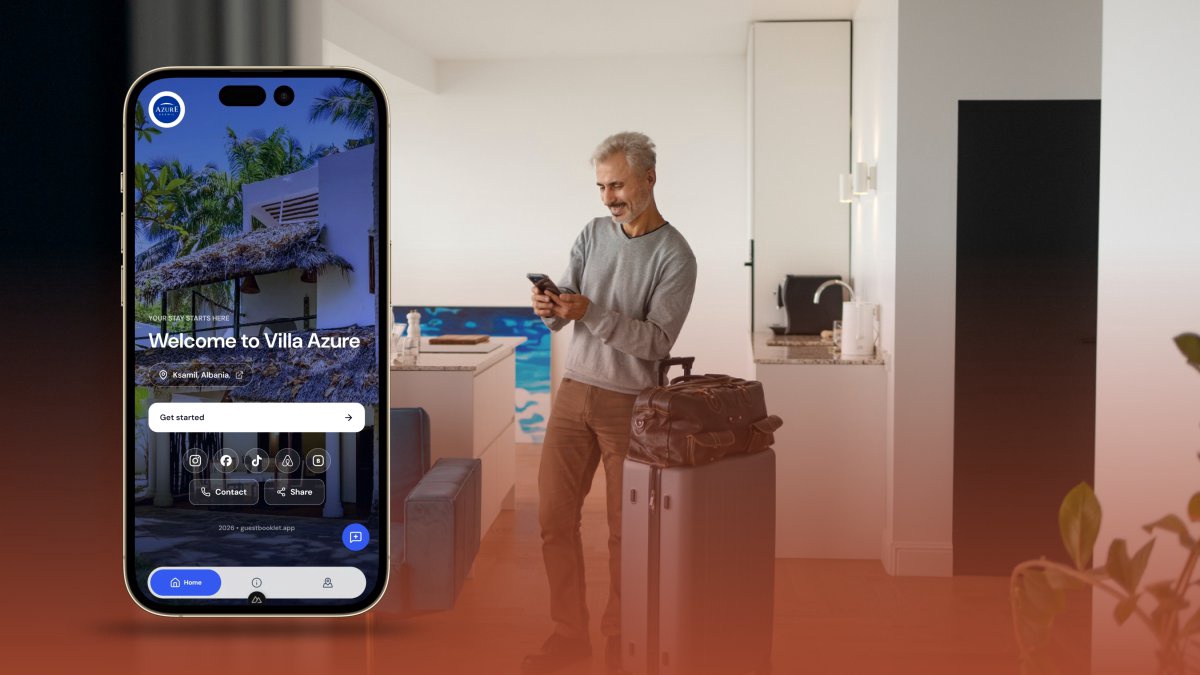
An Airbnb welcome book is one of the simplest ways to give guests useful information about a property.
Traditionally, a welcome book was a printed folder placed on a coffee table. Today, many hosts use a digital Airbnb welcome book that guests can open directly from their phones.
The format has changed, but the purpose remains the same: help guests understand the property, find important information, and enjoy their stay without having to ask the host about every small detail.
What Is an Airbnb Welcome Book?
An Airbnb welcome book is a collection of useful information for guests staying at your property.
It can include everything from Wi-Fi details and house rules to check-in instructions and recommendations for nearby restaurants.
A digital version can be shared through a link or QR code, making it accessible without a physical booklet.
Guestbooklet, for example, allows hosts to create a digital guidebook where information can be organized into different modules and accessed from a mobile browser.
1. Start With a Welcome Message
Your welcome section does not need to be long.
A simple message can explain that guests are welcome and point them toward the most important sections of the guide.
The goal is to make the guest feel oriented as soon as they open the page.
2. Add Wi-Fi Details
Wi-Fi is one of the most frequently requested pieces of information in a vacation rental.
Make the network name and password immediately visible.
If you use a Wi-Fi QR code, guests can connect without manually typing the password.
3. Explain How to Enter the Property
Your Airbnb welcome book should contain clear check-in instructions.
For example:
- Building entrance
- Apartment number
- Key location
- Lockbox instructions
- Smart-lock instructions
- Parking information
- Important access notes
Avoid complicated paragraphs. Numbered steps are usually easier to follow.
4. Include House Rules
Guests should be able to find your house rules without searching through Airbnb messages.
Common rules include:
- No smoking
- Quiet hours
- Pet policies
- Maximum number of guests
- Party restrictions
- Parking rules
- Trash instructions
Keep the wording clear and practical.
5. Explain the Most Important Things Inside the Property
Not every appliance needs a manual, but guests should know how to use anything that might cause confusion.
For example:
- Heating or air conditioning
- TV
- Washing machine
- Coffee machine
- Dishwasher
- Fireplace
- Hot tub
- Smart home controls
Short instructions or video guides can be particularly useful for unfamiliar equipment.
6. Create a Check-Out Checklist
Check-out instructions should be easy to scan.
You might ask guests to:
- Check out by a specific time
- Turn off lights and appliances
- Close windows
- Take out specific trash
- Return keys
- Lock the door
A digital guestbook can turn these instructions into a simple checklist instead of a long block of text.
7. Recommend Local Places
One of the most useful parts of an Airbnb welcome book can be the local guide.
Think beyond tourist attractions.
Useful recommendations can include:
- Breakfast cafés
- Restaurants
- Supermarkets
- Beaches
- Pharmacies
- Public transport
- Parking areas
- Activities
- Family-friendly locations
If possible, connect recommendations to maps so guests can get directions immediately.
8. Add Emergency Information
Include essential information that guests might need during an emergency.
Depending on your location, this can include emergency services, nearby medical facilities, pharmacy information, and a way to contact the host.
This section should be easy to locate and separate from ordinary local recommendations.
Digital or Printed Airbnb Welcome Book?
Both formats can work.
A printed welcome book is visible inside the property and does not depend on a phone.
A digital welcome book has another advantage: it can be updated whenever information changes.
For example, if your Wi-Fi password changes or a restaurant closes, you can update the digital guide without printing an entirely new welcome book.
A QR code can also make the guide easy to access from a phone.
How to Organize Your Airbnb Welcome Book
A simple structure could look like this:
- Welcome
- Wi-Fi
- Check-in
- House rules
- How things work
- Local recommendations
- Emergency information
- Check-out
This structure works because it follows the natural questions guests have during their stay.
Keep Your Welcome Book Updated
An outdated welcome book can be more frustrating than having no guide at all.
Review your information regularly.
Check:
- Wi-Fi credentials
- Door and lock instructions
- Check-in times
- Check-out procedures
- Restaurant recommendations
- Emergency information
- Appliance instructions
- Parking details
With a digital solution such as Guestbooklet, updates can be made without replacing printed materials.
Final Thoughts
An Airbnb welcome book does not need to be complicated.
The best guide is one that helps guests find the right information quickly.
Whether you use a printed booklet, a PDF, a QR-code guide, or a digital platform such as Guestbooklet, focus on the questions guests are most likely to ask before, during, and at the end of their stay.
A useful welcome book saves time for the host and makes the property easier for guests to navigate.